
CNC Machining Reno NV
If you've ever had a part come back from a machine shop that was "close enough" but not quite right, you already know why this topic matters. In manufacturing, close enough usually isn't good enough. A part that's off by a few thousandths of an inch can jam an assembly, fail under pressure, or cost you a customer.
That's why more manufacturers, engineers, and procurement teams searching for CNC machining in Reno, Nevada are looking past the lowest quote and asking a better question: who actually has the equipment, the people, and the track record to get this right the first time?
In this guide, we'll walk through how CNC machining works, what separates a solid shop from a risky one, and what to actually look for when you're vetting a CNC machining shop in Reno, Nevada for your next project. Whether you're sourcing a single prototype or a 5,000-part production run, this article should help you make a smarter, more confident decision.
What Is CNC Machining, Exactly?
CNC stands for Computer Numerical Control. In plain English, it means a computer program guides a cutting tool to remove material from a block of metal (or plastic) until it becomes the exact part shown on your drawing.
Instead of a machinist manually turning knobs and dials, the machine follows precise digital instructions. That's what makes CNC machining so repeatable — part 1 and part 500 come out the same, down to a fraction of a hair's width.
Common CNC processes include:
Milling – A rotating cutting tool removes material to shape the part.
Turning (lathe work) – The part spins while a stationary tool cuts it into shape.
Wire EDM – A thin electrified wire cuts through hardened metal with extreme precision.
Grinding – Used to hit ultra-tight tolerances on finished surfaces.
Most real-world parts don't need just one of these — they need two or three, done in sequence, by people who understand how each step affects the next.
Step-by-Step: How a CNC Machining Project Actually Works
If you've never worked with a machine shop before, here's what the process typically looks like from start to finish.
1. You Submit a Drawing or CAD File
This is usually a STEP file, a print, or a rough sketch with dimensions and tolerances. The more detail you provide, the more accurate your quote will be.
2. The Shop Reviews for Manufacturability
A good shop won't just quote your print blindly. They'll flag anything that could cause problems — a feature that's hard to hold tolerance on, a material that's difficult to source, or a design that could be simplified to save cost.
3. You Get a Quote and Lead Time
This should include price, timeline, and any notes about the process (number of operations, material, finish, etc.).
4. Programming and Setup
The shop programs the CNC machine, selects tooling, and sets up fixtures to hold the part securely during cutting.
5. Machining Begins
Depending on the part, this could mean one machine or several — a lathe for the rough shape, a mill for features, Wire EDM for tight internal geometry, and grinding for a final precision surface.
6. Inspection
Every dimension that matters on your drawing should be measured and verified — usually with a CMM (Coordinate Measuring Machine) — before the part ever ships.
7. Delivery
Parts ship with documentation, and for repeat orders, the process is already dialed in for next time.
Real-World Examples of CNC Machining in Action
Numbers are useful, but examples make this real. Here's where CNC machining shows up in everyday industry:
Hydraulic systems – Cylinders, valve bodies, and fittings that have to hold pressure without leaking. There's zero room for "close enough" here.
Industrial equipment manufacturers – Companies that build their own machines often need custom components that aren't available off the shelf.
Multi-process parts – A single bracket might need to be turned on a lathe, milled for mounting holes, then Wire EDM cut for a slot — three processes, one part, one shop.
Prototype-to-production runs – A company tests a design with a single first-article part, then scales up to hundreds or thousands of identical units once it's approved.
These aren't rare, unusual jobs. This is the everyday work of a serious precision manufacturing shop.
Key Benefits of Working With a Local CNC Machining Shop
Sourcing locally in Reno, rather than shipping parts across the country, comes with real advantages:
Faster turnaround – Shorter shipping times and easier scheduling of rush jobs.
Easier communication – You can call, visit the shop floor, or have an engineer walk you through a design change in person.
Lower shipping risk and cost – Especially important for heavy or oversized parts.
Better accountability – It's harder to get lost in the shuffle when your shop is a short drive away instead of a different time zone.
Support for multi-process jobs – A shop that keeps lathe, mill, Wire EDM, welding, and grinding all under one roof can move your part between processes without the delays (and errors) of sending work out to different vendors.
Common Mistakes to Avoid When Choosing a CNC Machining Shop in Reno, Nevada
We've seen these mistakes cost companies real time and money. Avoid them if you can.
Picking the cheapest quote without checking capability. A low price often means a shop that's outsourcing part of the job — which adds time, handling risk, and inconsistent quality.
Not asking about inspection. If a shop can't tell you how they verify tolerances, that's a red flag. Ask specifically whether they use CMM inspection.
Ignoring experience with your material. Machining aluminum and machining hardened steel are two different skill sets. Ask directly.
Skipping the manufacturability review. A shop that just runs your print exactly as drawn — even when a feature is nearly impossible to hold — isn't doing you any favors.
Forgetting to ask about multi-process capability. If your part needs turning, milling, and grinding, find out whether all three happen in one building or get shipped between three different vendors.
Not checking track record. Years in business and repeat customers tell you more than a slick website ever will.
Professional Tips for Getting the Best Results
A few habits that make a real difference on your end:
Send your full print, not just a 3D model. Tolerances, finish requirements, and material specs matter just as much as the shape.
Ask about first-article inspection on any new part before committing to a full production run.
Be upfront about your timeline. Shops can often plan around a known deadline far better than a last-minute rush request.
Build a relationship with one shop for repeat parts. A shop that already knows your part, your tolerances, and your quirks will save you time on every reorder.
Ask who's actually doing the work. "In-house" should mean in-house — not a nice way of saying it gets sent to three different shops before it comes back to you.
Why Choose Sierra Machinery
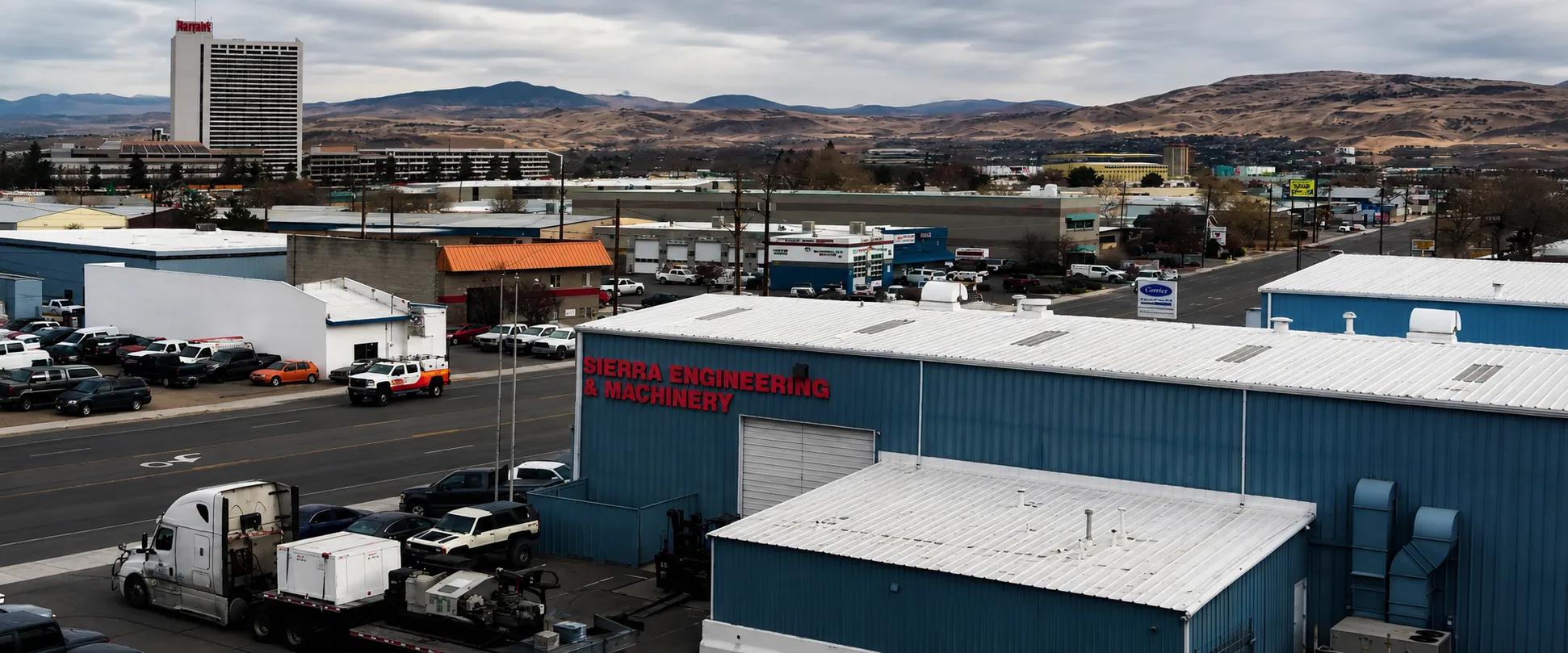
According to you, the reader, the decision usually comes down to trust — can this shop actually deliver what they're promising? Here's what sets Sierra Machinery & Engineering apart as a CNC machining shop in Reno, Nevada (based in neighboring Sparks, NV):
47 years in the same building. Sierra Machinery has been running precision manufacturing out of 1651 Glendale Avenue since 1979. That's not a small detail — it means decades of solved problems and refined process.
Everything under one roof. Lathe work, milling, Wire EDM, and grinding all happen in house. Nothing gets shipped out to a third-party shop and shipped back, which means fewer delays and fewer handoff errors.
Real experience running the floor. Their Quality Supervisor has 15 years in the quality field, and their Machine Building Supervisor is a certified welder with 14 years of hands-on fabrication experience. This isn't a team still learning on the job.
A dedicated CMM Lab. Every part is measured and verified to tolerance before it ships — not just spot-checked.
A track record you can verify. Sierra Machinery has completed over 170 projects for customers in the hydraulic and general industrial markets, with a 90% client retention rate.
Built for the tough jobs. They specialize in larger parts and multi-process work — the kind of project many shops turn away because it takes more floor space, more equipment, and more experience than they have.
They build machines too. Sierra Machinery designs and builds its own skiving and roller burnishing machines, which are running in facilities across North and South America, India, Japan, China, and Korea. When a shop builds precision machines for a living, you can trust they understand precision parts.
Conclusion
Finding the right partner for CNC machining in Reno, Nevada doesn't have to be complicated, but it does take asking the right questions. Look past the lowest quote. Ask about inspection. Ask who's actually running the machines. And find out whether your part will be handled by one shop or bounced between several before it ever reaches you.
A shop with decades of hands-on experience, in-house multi-process capability, and a real quality system will save you time, money, and headaches down the road — even if the first number on the quote isn't the lowest one you see.
Ready to Get Your Part Quoted?
If you're looking for a dependable, experienced CNC machining shop in Reno, Nevada, Sierra Machinery & Engineering is ready to talk through your project. Submit an RFQ, share your drawing or STEP file, and you'll hear back directly from the people running the shop floor — not a sales rep reading from a script.
Call 775-358-6721 (Mon–Fri, 7am–3:30pm) or request a quote online today.
Frequently Asked Questions
1. What's the difference between CNC machining and 3D printing?
CNC machining removes material from a solid block to create a part, while 3D printing adds material layer by layer. CNC machining typically produces stronger, more precise parts and is better suited for functional, load-bearing components made from metal.
2. How long does a typical CNC machining project take?
It depends on the part's complexity, the material, and how many processes are involved. A simple part might take a few days, while a multi-process job with tight tolerances could take a couple of weeks. Always ask for a specific lead time when you request a quote.
3. What materials can be CNC machined?
Most metals (aluminum, steel, stainless steel, brass, titanium) and many plastics can be CNC machined. The right material depends on your part's use — for example, hydraulic components often need steel or stainless steel for strength and corrosion resistance.
4. Do I need a full CAD file to get a quote, or can I submit a hand-drawn sketch?
A CAD file (like a STEP file) is ideal because it gives the shop exact dimensions to work from. That said, many shops can still quote from a clear hand-drawn sketch with dimensions and tolerances — just expect the quote to be less precise until a formal drawing is available.
5. Why does it matter if a shop does everything in house?
When lathe work, milling, Wire EDM, and grinding all happen under one roof, your part doesn't get shipped between different vendors for each step. That means fewer delays, less risk of damage or lost parts in transit, and one team accountable for the entire job from start to finish.